Search for ‘Ledger recovery key’ and you’ll find references to two different things: physical seed phrase backup products that let you store your 24 words in metal, and Ledger Recover, the company’s subscription-based cloud backup service. They work in completely different ways, carry different trade-offs, and solve different problems. Understanding the distinction is useful before deciding which, if any, you need.
Why the paper recovery sheet isn’t enough for long-term storage
Every Ledger ships with a paper recovery sheet: a card included in the box that you’re instructed to use during setup to write down your 24-word seed phrase. For most users, this card is the only backup they have. Paper has a straightforward vulnerability: it deteriorates. Water destroys it. Fire destroys it. Ink fades. Given enough time, a paper backup that was perfectly legible at setup can become partially or fully unreadable. The consequences of a damaged or unreadable backup range from inconvenient to a permanent loss of access. For anyone storing meaningful value, paper-only storage is a risk that’s inexpensive to address and worth addressing.
Physical metal seed phrase backup products
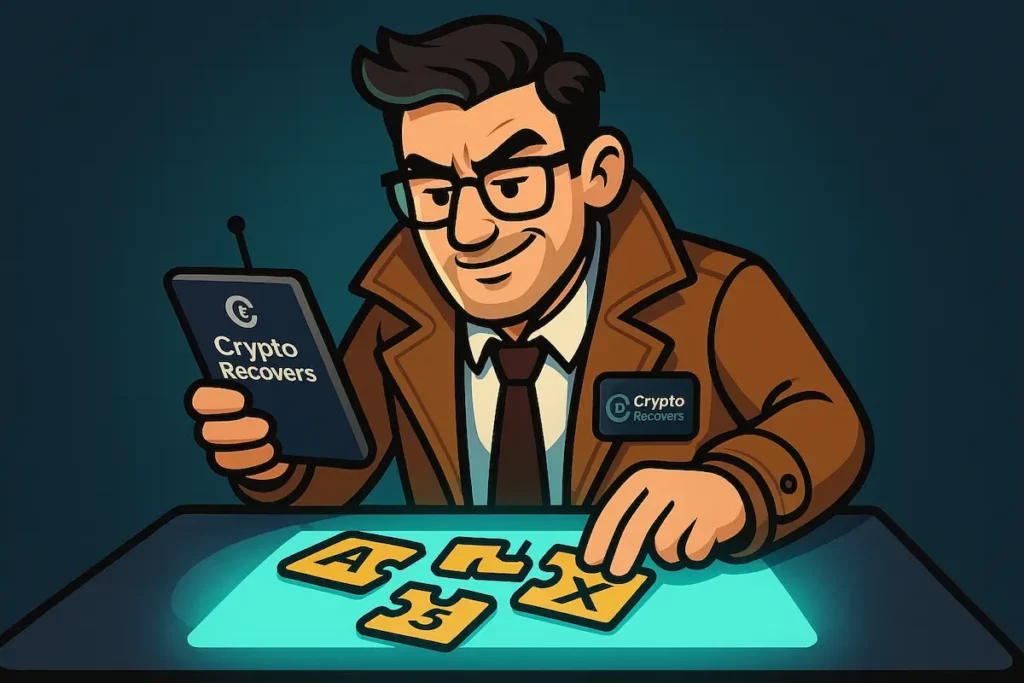
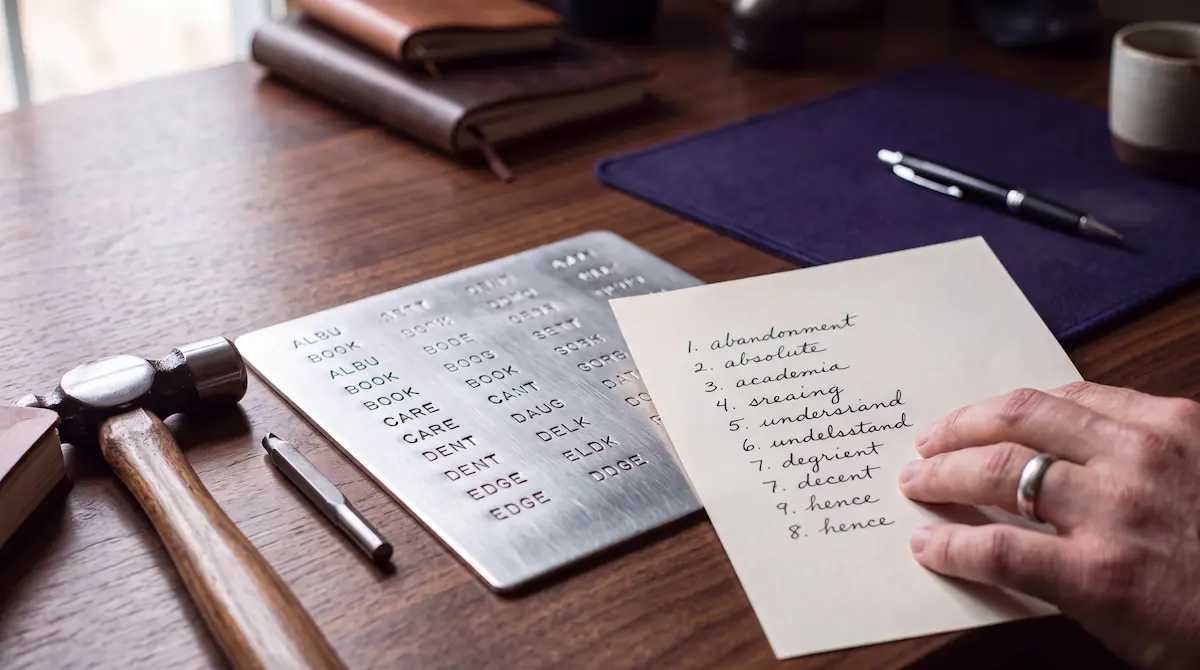
Metal seed phrase backups (sometimes called recovery keys, steel wallets, or seed plates) encode your 24 words in stainless steel, titanium, or similar materials. They’re designed to survive conditions that destroy paper: most products are rated to withstand temperatures above 1,000°C, submersion in water, and physical impact. The format varies across products: stamping kits where you press individual letters into metal, tile systems where you arrange letter tiles in slots and lock them in place, and pre-engraved or laser-etched plates. Some products store complete words; others use four-letter abbreviations, which is sufficient because the first four characters of every BIP39 word are unique within the word list.
These products are not Ledger-proprietary and work with any BIP39 seed phrase. Ledger has recommended or partnered with various options over the years, but the underlying products are independent of Ledger’s ecosystem and compatible with any BIP39-compatible wallet.
Ledger Recover: a completely different product
Ledger Recover is an optional, paid subscription service that encrypts and shards your seed phrase, then distributes the pieces across three identity-verified custodians: Coincover, EscrowTech, and Ledger itself. If you lose both your device and your seed phrase backup, you can recover access by verifying your identity with the custodians. The monthly fee and the subscription model mean recovery is available without a physical backup, which is the problem it’s designed to solve.
When Ledger Recover launched in 2023, it generated significant controversy because it demonstrated that Ledger firmware could, under user consent, extract seed phrase data from the Secure Element chip and transmit it. The security model requires trusting Ledger, the custodial partners, and the integrity of all future firmware updates. Whether that trade-off is acceptable depends on your threat model. Ledger Recover is opt-in and requires explicit user activation. It doesn’t affect devices where it hasn’t been enabled.
Principles for seed phrase storage that apply regardless of product
Store the phrase in at least two physically separate locations: if one is destroyed by fire or flooding, the other survives. Use metal rather than paper for anything intended to last more than a few years. Never store the phrase digitally: no photos, no cloud storage, no password managers accessible over the internet. And don’t store the phrase in the same physical location as the device. If someone takes both, they have everything they need to drain the wallet.
What a physical backup can’t fix
A metal backup only protects information that’s already correct and complete. If your phrase is already lost, damaged, or missing words, a new backup product doesn’t solve the problem. That’s a recovery scenario requiring different tools. If you’re in that situation, get help with your Ledger wallet recovery. And if you want to understand what information is actually needed to restore your wallet (with or without the original device), that’s covered here.