
Problem
Incomplete Recovery Phrase
Missing recovery words? Learn how word count, known positions, wallet format and remaining information affect whether a recovery search is feasible.
Short answer
An incomplete recovery phrase may be recoverable when enough information remains to limit the search: the number of missing words, their positions, the phrase format and any passphrase decide feasibility. For BIP-39, the word list and checksum filter candidates, and a known public address verifies the result. A fully lost phrase cannot be recreated from nothing.
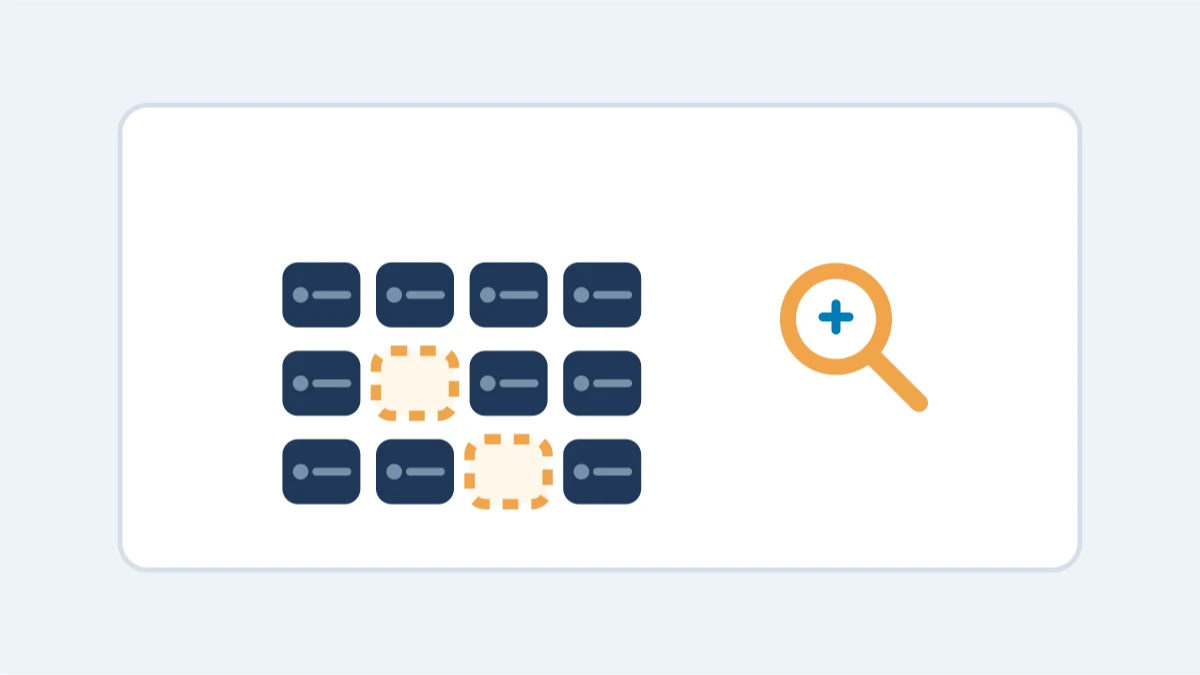
If you're staring at a phrase with one or more blanks, here's why it isn't hopeless: BIP-39 phrases (used by Ledger, Trezor, MetaMask and most modern wallets) encode both the original random data and checksum bits. The final word contains some of each, and every word comes from a fixed list of 2,048. These constraints narrow the search; they do not identify the correct phrase on their own. Start by writing down exactly which positions are missing.
What you should do first
- Write down every word you are sure about, in exact order, and mark the positions you are missing.
- Note which wallet created the phrase and what coin types it holds. Most modern wallets use BIP-39, but Electrum uses its own seed format with a different versioning system, and old wallets may use other formats.
- Check the word count: 12, 15, 18, 21 or 24 words. A phrase with the wrong count (11, 13, 23, 25) usually means a word is missing — or an extra word was added.
What is realistic
- One missing word: a known position gives at most 2,048 candidate words before checksum filtering. A valid checksum does not guarantee a unique answer; compare derived addresses with a known public address using the correct wallet settings and any BIP-39 passphrase.
- Two missing words: knowing both positions keeps the search to 2,048 candidates per unknown word before the checksum narrows it further; not knowing the positions adds the ordering itself to the search.
- Three or four missing words: still within the cases we take on, but the outcome is never certain. Each further gap multiplies the raw search space by 2,048, so what counts is which positions you know, whether the remaining words are in the right order, whether the wallet type is known, and whether a public address is available to confirm a candidate.
- The wrong word, mixed-up order and illegible words are separate problems: see the wrong seed word and wrong word order pages.
What is not realistic
A phrase with no usable words and no other material — no file, no device, no partial backup — cannot be reconstructed. There is nothing to constrain the search. We will tell you that honestly.
What not to do
- Do not keep guessing on the device. Hardware wallets let you re-enter the phrase, but you will waste attempts and gain no information.
- Do not type partial phrases into websites that claim to "search" them for you: you are leaking the material that proves ownership.
- Do not discard the original backup card, even if several words have faded. Positional clues and faint marks of handwriting are valuable.
When professional help changes the outcome
Professional recovery turns the same checksum logic into a systematic search: candidate generation over the 2,048-word list, positional constraints, checksum verification, and — where the wallet type matters — Electrum seed version detection or SLIP-39 Shamir shares. If you have three or more missing words, or the wallet type is unclear, the structured approach is genuinely faster and safer than what you can run yourself.