
Knowledge base
Hardware Wallet Recovery Concepts: Device vs Seed, PIN vs Passphrase
A hardware wallet holds keys, not coins. The seed recreates the wallet, the PIN protects the device, and a passphrase derives a separate wallet when combined with the recovery phrase. This reference maps those concepts to what is recoverable.
Short answer
A complete wallet backup and any required passphrase can restore access in a compatible wallet. Without that backup, the original device may still offer a recovery route, depending on its model, firmware, condition and the access details you still have.
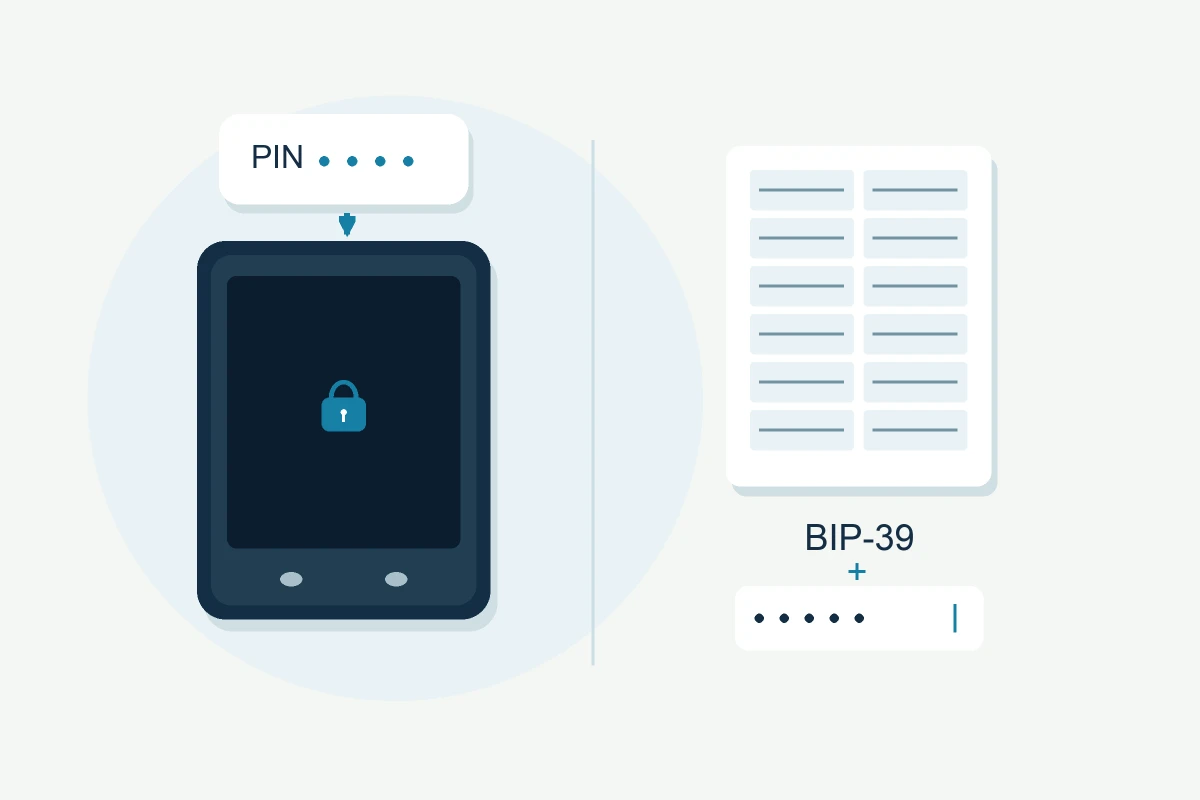
Hardware wallet problems are usually not lost funds: the coins live on the blockchain, and the device only holds the keys. What is recoverable depends on which of the four concepts you still have: the seed, the device, the PIN or the passphrase.
Device vs seed
- The device holds the keys; the seed phrase (usually 12 or 24 BIP39 words) recreates the entire wallet on any compatible device
- If your device is lost, broken or wiped, you can restore your wallet on a compatible device using its recovery phrase
- A wiped device with no recovery phrase and no other backup cannot restore access: the keys have been erased
PIN vs passphrase
- The PIN unlocks the device itself. Wrong attempts can lock or wipe it. The recovery phrase restores the wallet’s keys, not the previous PIN or all device settings
- The passphrase (sometimes called the '25th word') is an optional string combined with the recovery phrase to derive another wallet. It need not be a single word; restoring that wallet requires the exact passphrase as well as the recovery phrase
- A forgotten passphrase may be recoverable by testing candidates with the recovery phrase and checking the derived wallet against known data, such as a receiving address. Remembered words, length or patterns can narrow the search; feasibility depends on the candidate set and the available verification data
Hidden wallets and Shamir
- A 'hidden wallet' is derived from the recovery phrase and a passphrase. Restoring that wallet requires both the recovery phrase and the exact passphrase used to create it
- Shamir (SLIP-39) splits a master secret into shares. In a 2-of-3 setup, any two complete, valid shares can reconstruct it; one share alone cannot
- The shares are device-independent and can restore into compatible software
Migration and compatibility
- BIP39 seeds move between hardware brands: Ledger, Trezor and BitBox all restore from a standard BIP39 phrase (check each device's import flow)
- After a restore, the derivation path and address type must match the original wallet (see the derivation reference); a wrong type shows a zero balance
- Before migrating, verify a receiving address on the new device matches the old wallet
What is impossible
- If the device has been wiped and no recovery phrase or other copy of the secret material survives, there are no remaining keys on that device to recover
- Funds already sent away: transactions cannot be reversed
Safety
- Never enter a hardware seed into a website, an app that 'checks' it, or any recovery tool: the device exists to keep the seed offline
- If you type the seed somewhere, the wallet is exposed from that moment on: migrate to a fresh wallet after recovery
Not back in yet?
Tell us briefly what you still have: a file, a phrase, a device, or what you remember. We’ll give you a straight answer on whether recovery is realistic. The first assessment is free and needs no wallet secrets, and there’s nothing to pay unless the recovery succeeds.