
Knowledge base
Wallet Formats: Identification, Encryption and Recovery by Format
Each wallet format has its own files, encryption scheme and recovery route. This is the format-by-format reference for identification and what is possible.
Short answer
A wallet format determines how to identify the file, which encryption protects it, and what a recovery search can use. Identifying the format is the first step in any recovery.
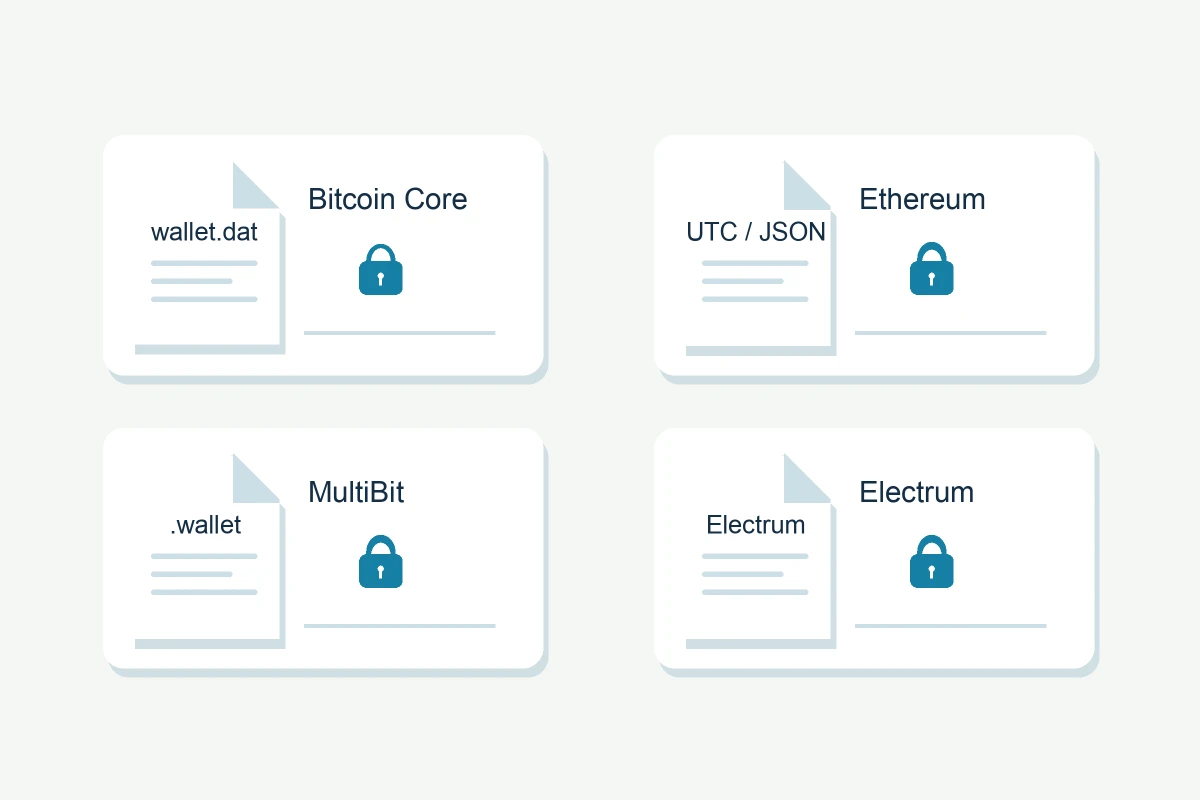
The quick identifier is in our wallet-file guide; this reference adds the technical detail per format.
Bitcoin Core wallet.dat
- Files: wallet.dat (Berkeley DB in legacy versions; SQLite and descriptor formats in modern ones)
- Encryption: AES-256-CBC around the key material, unlocked by the wallet password
- Recovery: password search against the encrypted key data, on a copy; the hash (the $bitcoin$ line) can be shared instead of the file
Electrum
- Files: default_wallet (JSON), wallet files per account
- Encryption: user-chosen password protecting encrypted keystores; seed-based derivation (Electrum seed system)
- Recovery: open in Electrum; wrong password means a password search; a seed of the right era restores the wallet
MultiBit Classic and MultiBit HD
- Files: .wallet (Classic), mbhd.wallet.aes, an AES-encrypted bitcoinj protobuf wallet (HD)
- Software discontinued; downloads from unofficial sources are a malware risk
- Recovery: password against the encrypted file; HD-era wallets can restore from their seed
Blockchain.com legacy
- Files: wallet.aes.json (wallet backup encrypted with the main password)
- Optional second password: adds encryption to private key material inside the wallet; it is not the password for the outer backup file
- Recovery: identify which password is missing. To search for a second password from an encrypted backup, the outer layer must first be decrypted with the main password.
Ethereum keystore / UTC JSON
- Files: UTC--timestamp--hex.json, keystore files
- Encryption: scrypt or PBKDF2 key derivation with AES-128-CTR cipher (fields: crypto, cipher, kdf, mac)
- Recovery: password against the keystore; any Ethereum wallet supporting keystore import can then open it
App vaults
- MetaMask vault, Jaxx, Coinomi, Exodus and similar: app-specific JSON vaults with their own KDF and cipher settings
- Recovery: app-specific; the vault is tied to the software that created it
Other formats
- Monero: .keys files encrypted with the wallet password, plus a 25-word seed
- Solana: keypair JSON (base58 or byte array); Polkadot: JSON backup with password encryption
- Paper wallets: WIF or QR; sweep once into a fresh wallet
- Brain wallets: a passphrase turned directly into a key; recovery is a passphrase search, not a file problem
The pattern
Every format reduces to the same question: which encrypted material exists, which KDF and cipher protect it, and what do you remember about the password? Once you can answer that, the recovery methods reference maps it to a route.
Haven’t regained access yet?
A first assessment costs nothing, and you won’t need to share any wallet secrets. Describe what you still have, and we’ll tell you honestly whether recovery is realistic. If the recovery doesn’t succeed, you don’t pay.