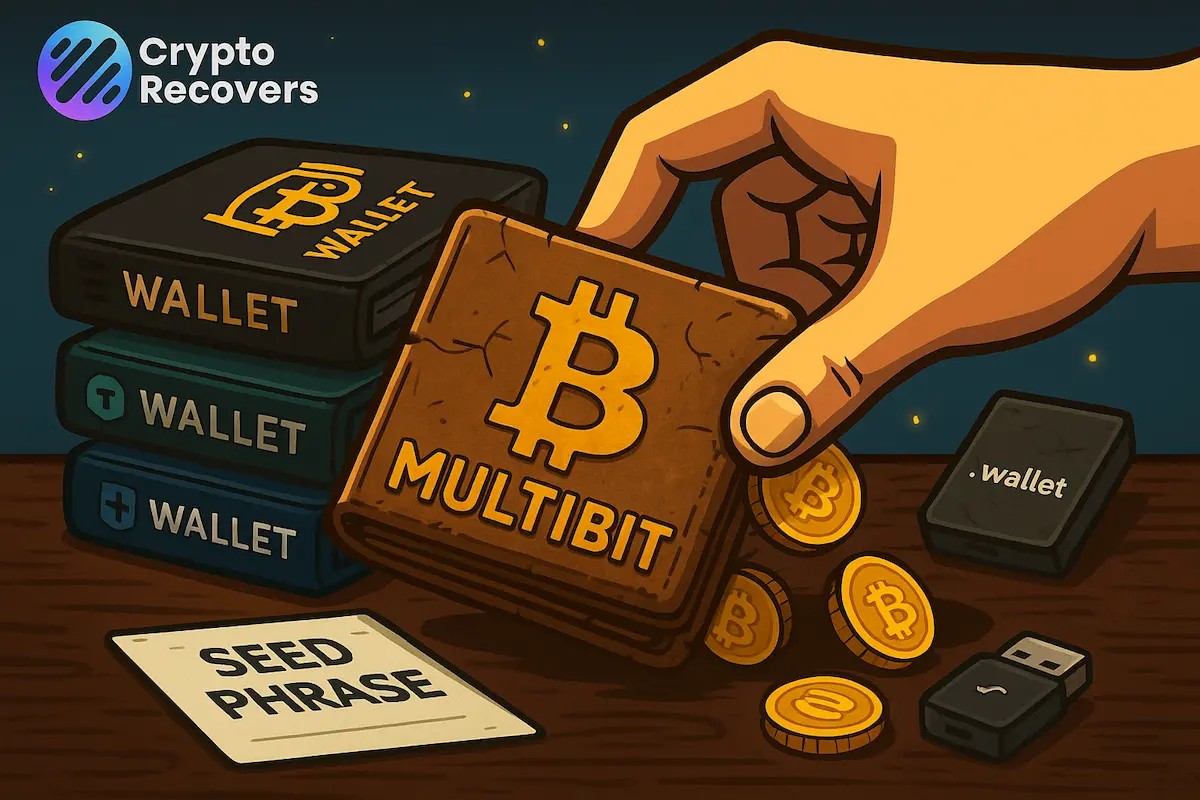
MultiBit was one of the most widely used Bitcoin wallets in the early 2010s. At its peak it had been downloaded approximately 1.5 million times, making it the go-to option for people who wanted to use Bitcoin without running a full node. Then, in 2017, it was shut down. No migration tool, no clear path for users, and no ongoing support. If you’ve found an old MultiBit wallet file and are wondering what happened,or whether your Bitcoin is still accessible, this article covers both questions in full.
Perché MultiBit è diventato così popolare
To understand the story, you have to understand what Bitcoin wallets looked like in 2011. The main option at the time was Bitcoin Core, a full-node client that required downloading the entire blockchain, which even then was tens of gigabytes. Syncing it took days. Running it required technical knowledge that most people didn’t have.
MultiBit was the answer to that problem. It used Simplified Payment Verification (SPV), a method that allowed users to interact with the Bitcoin network without downloading the full blockchain. Syncing took minutes instead of days. The interface was accessible. You could receive and send Bitcoin within minutes of installation, which in 2011 was a genuinely new experience for most people.
The wallet ran on Windows, macOS, and Linux, supported multiple languages, and was designed with non-technical users in mind. By 2013, during Bitcoin’s first major price surge, it became the entry point for a large wave of new users. Many of those people stored Bitcoin they intended to revisit, and then forgot about it when the price fell back.
L’acquisizione da parte di KeepKey
In 2016, KeepKey, a hardware wallet manufacturer based in the United States, acquired MultiBit from its original developers, Jim Burton and Gary Rowe. The deal was paid in Bitcoin. On paper, it made sense: KeepKey made hardware wallets and wanted to expand into software. MultiBit’s large user base gave them an established audience, and their security background seemed like a natural fit.
The reality was more complicated. MultiBit’s codebase was significantly older than it appeared from the outside. The HD version in particular was built on Java frameworks that had fallen behind Bitcoin’s development. Adding SegWit support, which Bitcoin activated in 2017, would have required not incremental updates but a substantial rewrite of core components. KeepKey found the technical debt deeper than anticipated, and the resources to address it weren’t available.
Perché MultiBit è stato chiuso
Nel luglio 2017 KeepKey pubblicò un annuncio: MultiBit veniva dismesso con effetto immediato. Il codice era troppo datato, il lavoro necessario per modernizzarlo andava oltre ciò che l’azienda poteva finanziare, e continuare a distribuire un prodotto sempre meno affidabile non era qualcosa che erano disposti a fare. Il sito ufficiale fu messo offline, i download furono rimossi e gli utenti rimasero senza un percorso di migrazione ufficiale.
The shutdown also exposed a design flaw in MultiBit HD that many users only discovered when they tried to recover their wallets later. The seed phrase that the HD version generated as a backup was encrypted with the same password used to protect the wallet file. This made it incompatible with standard recovery in other wallets, entering the words into Electrum would produce no balance, even with a completely correct phrase, because the derivation path needed to be set manually to match what MultiBit HD used.
I tuoi Bitcoin non sono spariti
This is the most important thing to understand: the discontinuation of MultiBit as software has no effect on the Bitcoin stored in those wallets. Your funds were never inside MultiBit. They were always on the Bitcoin blockchain, a globally distributed ledger that operates independently of any wallet application.
MultiBit was a tool for accessing those funds. It managed the private keys that allow you to control specific Bitcoin addresses on the blockchain. When the software stopped working, you lost access to the interface, but the keys, and the funds they control, are unchanged. Your coins are still at the same addresses, with the same balances they had when you last checked. The problem is access, not ownership.
MultiBit Classic vs MultiBit HD
MultiBit Classic
MultiBit Classic stored private keys directly in a .wallet file. If you set a password, the file was encrypted with AES-256. Without the correct password, the file can’t be decrypted, there is no seed phrase backup. If you have the file and can recover the password, recovery is possible. If the file is gone and there’s no backup, the options narrow considerably.
MultiBit HD
MultiBit HD generated a 12 or 18-word seed phrase when you set up the wallet, intended as an independent backup. The wallet file (.wallet.aes) was also protected by a password, giving two apparent routes to recovery. In practice, MultiBit HD’s non-standard derivation path and encrypted seed phrase mean that standard recovery procedures for other HD wallets don’t apply directly. Someone with the correct phrase who follows normal Electrum recovery steps will most likely see a zero balance, not because the phrase is wrong, but because the derivation path needs to be set manually.
Perché scaricare MultiBit è pericoloso nel 2026
Poiché MultiBit non è più distribuito ufficialmente, qualsiasi versione trovata tramite una ricerca sul web è una copia di terze parti. Un numero significativo di queste è stato manomesso. Le versioni infette sembrano identiche all’originale e catturano il file del tuo wallet e la password nel momento in cui li inserisci, trasmettendo tutto silenziosamente a un server remoto. È già successo a utenti reali che tentavano recuperi tutto sommato semplici.
Se hai davvero bisogno di usare il software MultiBit nell’ambito di un processo di recupero, l’unica versione sicura è quella dal repository GitHub originale. Usala solo su una macchina completamente offline, e dai per scontato che quella macchina sia compromessa una volta terminato.
Quali sono le tue opzioni oggi
If you still have your wallet file and your password, or most of it, recovery through a modern wallet like Electrum is often possible with the right steps. If you have a MultiBit HD seed phrase but can’t see a balance, the most likely issue is the derivation path, which is fixable. If the password is gone, recovery depends on systematically reconstructing it from whatever hints you can provide. If the file itself is missing, the question is whether it can still be retrieved from old storage.
For a detailed walkthrough of every scenario, including incomplete seed phrases, deleted files, and forgotten passwords, the practical guide on how to recover a MultiBit wallet covers each situation step by step.
Perché vale la pena recuperare questi wallet
Sono state scaricate circa 1,5 milioni di copie di MultiBit, in buona parte durante l’impennata del prezzo di Bitcoin del 2013. Molti utenti conservarono cifre che all’epoca sembravano piccole. Ai prezzi attuali di Bitcoin, quelle stesse cifre hanno un aspetto molto diverso. Lavoriamo regolarmente con clienti che non toccano il loro wallet MultiBit da sei anni o più e scoprono che il saldo è ormai considerevole.
C’è anche un’urgenza pratica: i supporti di memoria si deteriorano. Gli hard disk si guastano, le chiavette USB diventano illeggibili, e file di wallet che oggi esistono potrebbero non esserci più tra cinque anni. Se hai un vecchio wallet MultiBit, la finestra per recuperarlo è aperta ora.
Hai ancora un wallet MultiBit a cui non riesci più ad accedere?
CryptoRecovers specialises in MultiBit wallet recovery, both Classic and HD. Forgotten passwords, lost files, incomplete seed phrases. We’ve been helping MultiBit users since 2019 and only charge if we succeed.
Domande frequenti
MultiBit è stato dismesso nel luglio 2017 da KeepKey, che lo aveva acquisito l’anno precedente. La decisione si riduceva al debito tecnico: il codice era troppo datato per essere aggiornato senza una riscrittura completa, e KeepKey non aveva le risorse per farlo. L’adozione di SegWit da parte di Bitcoin ampliò ulteriormente il divario. Piuttosto che continuare a rilasciare un prodotto sempre meno affidabile, KeepKey lo chiuse.
No. I Bitcoin conservati in un wallet MultiBit sono ancora sulla blockchain di Bitcoin, invariati. MultiBit era uno strumento per interagire con quei Bitcoin — non il luogo in cui erano custoditi. La dismissione dello strumento riguarda l’accesso, non la proprietà. I fondi sono ancora lì, raggiungibili con il giusto approccio di recupero.
Sì, in molti casi. Se hai il file del tuo wallet e una password oppure una seed phrase (per i wallet HD), esistono percorsi chiari per il recupero tramite wallet moderni. Se ti manca uno o più di questi elementi, diventa più difficile ma non necessariamente impossibile. La nostra guida passo dopo passo al recupero di un wallet MultiBit illustra ogni scenario nel dettaglio.
Inizia individuando il file del tuo wallet — .wallet per Classic, .wallet.aes per HD. Controlla le cartelle di installazione predefinite sul tuo vecchio computer, eventuali backup, l’archiviazione cloud e le chiavette USB. Una volta trovato il file, fanne una copia prima di fare qualsiasi altra cosa e lavora solo sulla copia. Poi fai il punto su cos’altro hai: la tua password o eventuali frammenti di essa, la tua seed phrase se usavi la versione HD. Con questo inventario avrai un quadro molto più chiaro delle opzioni di recupero disponibili.
I servizi legittimi non chiedono un pagamento anticipato e non garantiscono risultati. Lavorano con una commissione basata sul successo, utilizzano contratti scritti prima di iniziare qualsiasi lavoro e non richiedono informazioni sensibili prima che tali accordi siano formalizzati. Puoi leggere cosa dicono i nostri clienti nella nostra pagina delle testimonianze per farti un’idea realistica di come si svolge il processo e dei tipi di casi che abbiamo gestito.
Non in modo affidabile. Il software non viene aggiornato dal 2017 ed è incompatibile con l’attuale protocollo di Bitcoin. La maggior parte degli utenti segnala sincronizzazioni fallite, crash o saldi errati. I download non ufficiali reperibili online contengono spesso malware. In termini pratici: anche se riuscissi ad aprirlo, non è uno strumento sicuro né funzionale per accedere ai tuoi fondi. L’approccio migliore è usare un wallet moderno per accedere alle chiavi private, invece di cercare di far funzionare il software originale.